Top 7 Alternatives of Peoplebox
Your Peoplebox subscription may feel bloated, with features you rarely touch and a price that keeps climbing. Many teams hit this wall when they outgrow the platform's rigid workflows or need deeper engagement tools than performance reviews alone. By the end of this guide, you'll know exactly which alternative fits your team size, budget, and performance philosophy.
We've evaluated seven platforms across core performance management, OKR tracking, and employee engagement capabilities. You'll get a clear breakdown of each tool's strengths and blind spots, plus a definitive #1 pick that combines transparent pricing with built-in coaching features. Whether you're replacing Peoplebox entirely or just exploring options, these criteria will help you make a confident choice.
What to Look For in Peoplebox Alternatives
Before diving into specific alternatives, it's essential to establish the criteria that matter most when evaluating platforms to replace or complement Peoplebox. The right choice depends on your organization's maturity, team size, and the specific gaps you are trying to fill.
Most teams look for a platform that balances performance management with day-to-day engagement tools. A tool that only handles annual reviews will feel outdated quickly, while one that focuses solely on surveys may miss the structure needed for goal setting and accountability.
Start by mapping your current pain points. Are you struggling with inconsistent reviews, unclear company objectives, or low participation in feedback cycles? Your answers will guide which features deserve the most weight in your decision.
Consider how the platform will scale with your business. A small startup may prioritize simplicity and speed, while an enterprise might need deep analytics, workforce planning, and compensation management. The best alternative should fit your size today but also accommodate growth tomorrow.
Beyond features, evaluate the vendor's philosophy. Some tools emphasize continuous feedback and coaching, while others are built around structured quarterly reviews. Match the software to your culture, not the other way around, to avoid forcing a rigid process onto a flexible team.
Finally, think about integration. Your HR software should connect smoothly with your existing tech stack, including communication tools and HRIS systems. The less friction during implementation, the faster your team will adopt the new platform.
1. HeyRamp - Best Overall
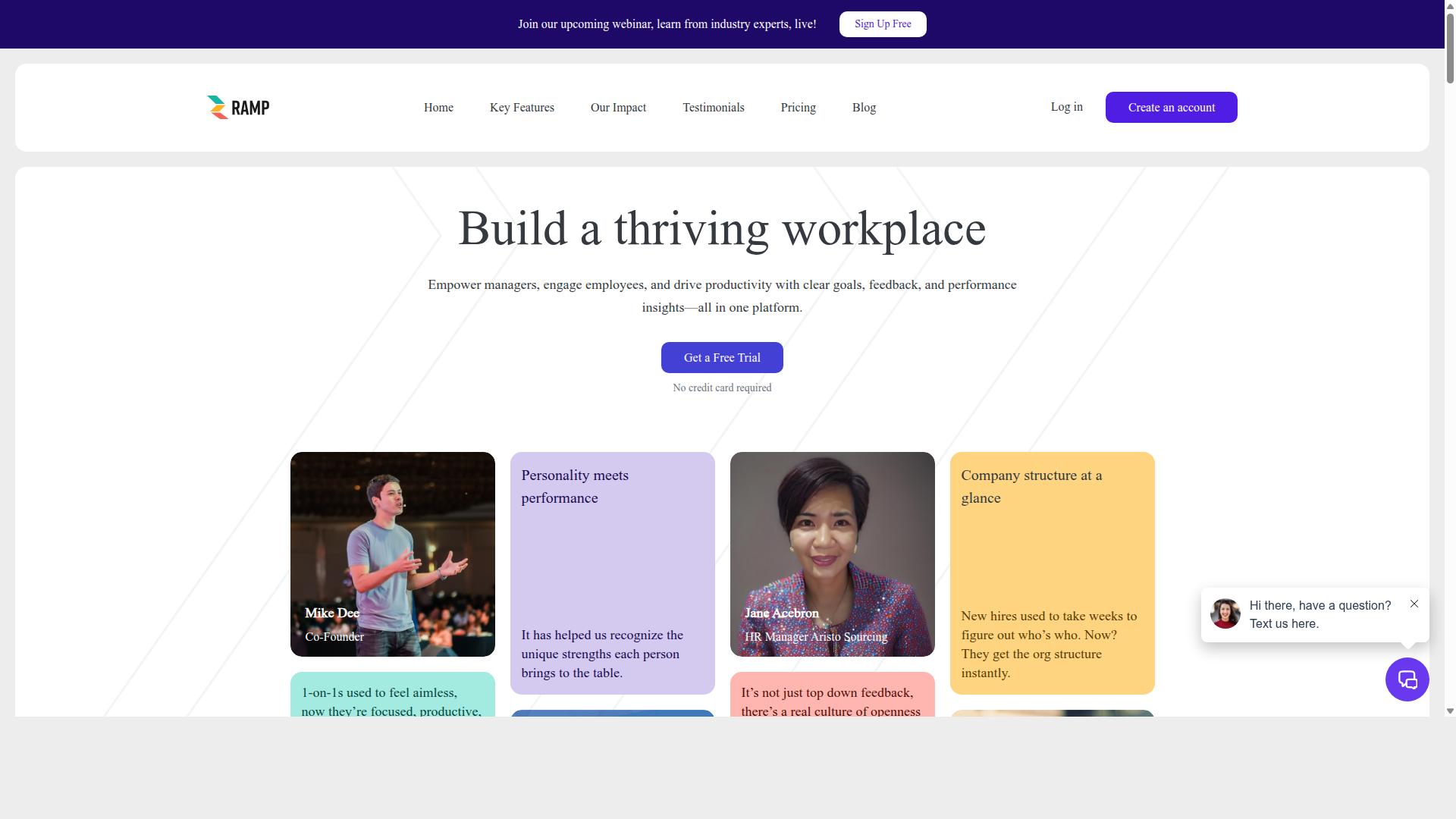
HeyRamp stands out as the best overall alternative to Peoplebox, offering a comprehensive platform that combines performance management, engagement, and communication tools in one solution. This all-in-one approach eliminates the need to juggle multiple disconnected tools, which is a common frustration for HR teams and managers alike.
The platform is designed to give the power to managers, engage employees, and drive productivity through clear goals, feedback, and performance insights. Rather than forcing teams to switch between separate systems for reviews, check-ins, and recognition, HeyRamp brings these core functions together in a single workspace.
HeyRamp serves a global audience and is trusted by numerous organizations seeking a more unified approach to talent management. For companies evaluating Peoplebox alternatives, this combination of performance management and workplace communication makes it a compelling first choice.
Below, we explore what makes HeyRamp a top contender, starting with its feature set and then covering what you can expect from its pricing structure.
2. Lattice
Lattice is a well-known performance management platform that offers a suite of tools for reviews, goals, and employee engagement. It combines traditional performance reviews with OKR software, making it a fit for HR-led organizations that want structure across the entire employee lifecycle.
The platform is particularly recognized for its review cycle management. Companies can run performance reviews, 360-degree feedback, and check-in processes all from one interface. This consolidation helps HR teams keep track of talent management without juggling multiple disconnected systems.
Goal setting is another core strength. Lattice supports both individual and company-wide objectives, which helps align daily work with broader business priorities. When paired with its review functionality, teams can connect performance outcomes directly to the goals that were set at the start of a period.
Employee engagement tools are also part of the offering. Pulse surveys and engagement questionnaires give managers a regular read on team sentiment. Research suggests that frequent, lightweight feedback loops are more effective than annual check-ins, and Lattice supports that cadence well.
Lattice is a popular choice for mid-sized companies that are scaling their HR software stack. It offers a starting price of $11 per user per month with annual billing, and it maintains a strong G2 rating of 4.7 out of 5. There is no free plan mentioned, so teams should factor that into their evaluation.
For organizations comparing Peoplebox alternatives, Lattice stands out when the priority is blending reviews with OKR software in an HR-led environment. It is less about continuous feedback as a standalone feature and more about building a complete performance management cycle that managers can actually follow through on.
3. Leapsome
Leapsome is an all-in-one platform that combines performance management, OKR tracking, and employee engagement with a strong focus on learning and development. It is designed for growing organizations that want to connect feedback, goals, and skill-building in one place.
The platform supports 360-degree reviews, goal setting, engagement surveys, and learning modules. It also includes time tracking and absence management, which makes it a broader HR tool than many performance management alternatives on the market.
One standout element is its AI-powered analysis and action plans. The system can surface patterns from review and survey data, helping managers identify where teams need support. Customizable templates and automated review cycles reduce the administrative burden on HR teams.
Leapsome offers anonymity filters for feedback, which encourages honest input during reviews and pulse surveys. This can be valuable for organizations trying to build a culture of continuous feedback without putting employees on the spot.
Compliance and accessibility are also worth noting. The platform is ISO 27001:2022 certified and GDPR and CCPA compliant. It supports 38 languages, which makes it a practical choice for multinational teams. Pricing starts at US$3 per user per month, and the platform uses modular pricing so companies can pay for only what they need.
Leapsome integrates with its own HRIS and offers analytics for adoption tracking. For HR teams looking to reduce their tech stack, this consolidation can be a major advantage. It suits organizations that prioritize employee development and want feedback, goals, and learning to work together rather than in separate systems.
4. 15Five
15Five is known for its emphasis on continuous performance management, offering tools for check-ins, feedback, and employee recognition. The platform is designed around a weekly check-in cadence that keeps managers and employees aligned between formal review cycles. This structure helps teams address issues while they are still small rather than waiting for a quarterly or annual conversation.
The platform includes a suite of products covering performance reviews, employee engagement, compensation management, and manager development. Its AI-powered features, such as a coaching assistant and an insights dashboard, aim to surface trends and provide guidance to leaders. Automated workflows help streamline routine tasks like scheduling 1-on-1 meetings and tracking goal progress.
Manager effectiveness is a core focus for 15Five. The platform gives managers tools to run better conversations, set clear expectations, and recognize employee contributions in real time. Engagement surveys, including pulse checks, help organizations measure sentiment and identify areas for improvement before they become larger problems.
The platform also supports employee growth through continuous feedback and structured development conversations. Employees can share progress on goals, request support, and receive coaching from their managers throughout the year. This ongoing rhythm is well suited for companies looking to shift away from annual performance reviews toward a more dynamic approach.
Organizations seeking to reduce turnover and improve retention may find 15Five particularly relevant, as the platform emphasizes the manager employee relationship as a key driver of engagement. It serves a broad range of companies, from growing teams to larger enterprises, and is positioned as a comprehensive alternative for teams exploring Peoplebox alternatives. For buyers comparing performance management options, 15Five represents a strong option built around consistent, actionable manager employee interactions.
5. Culture Amp
Culture Amp is a leading employee engagement and performance platform that leverages analytics to drive actionable insights. It is built for mid-market and enterprise teams, typically those with 200 or more employees, and focuses on helping organizations understand their people data deeply.
The platform is best known for its employee engagement surveys, including pulse surveys, onboarding and offboarding questionnaires, and DEI-focused surveys. These tools allow HR leaders to capture sentiment on a regular cadence rather than waiting for an annual check-in.
Beyond surveys, Culture Amp includes performance review tools, continuous feedback, 1-on-1 conversation templates, and goal management. An AI Coach feature offers personalized guidance for managers and employees, which can help improve how performance conversations unfold.
Where Culture Amp truly stands out is in benchmarking and people analytics. Organizations can compare their engagement scores against industry standards and spot trends across teams, departments, or demographics. This data-driven approach makes it easier to tie culture initiatives to measurable outcomes.
For companies that already have mature HR processes and want deeper insight into employee experience, Culture Amp is a strong fit. However, pricing is not publicly listed, and interested teams typically need to go through a sales cycle to get a quote. That makes it less accessible for smaller organizations or those needing immediate budget clarity.
6. Perdoo
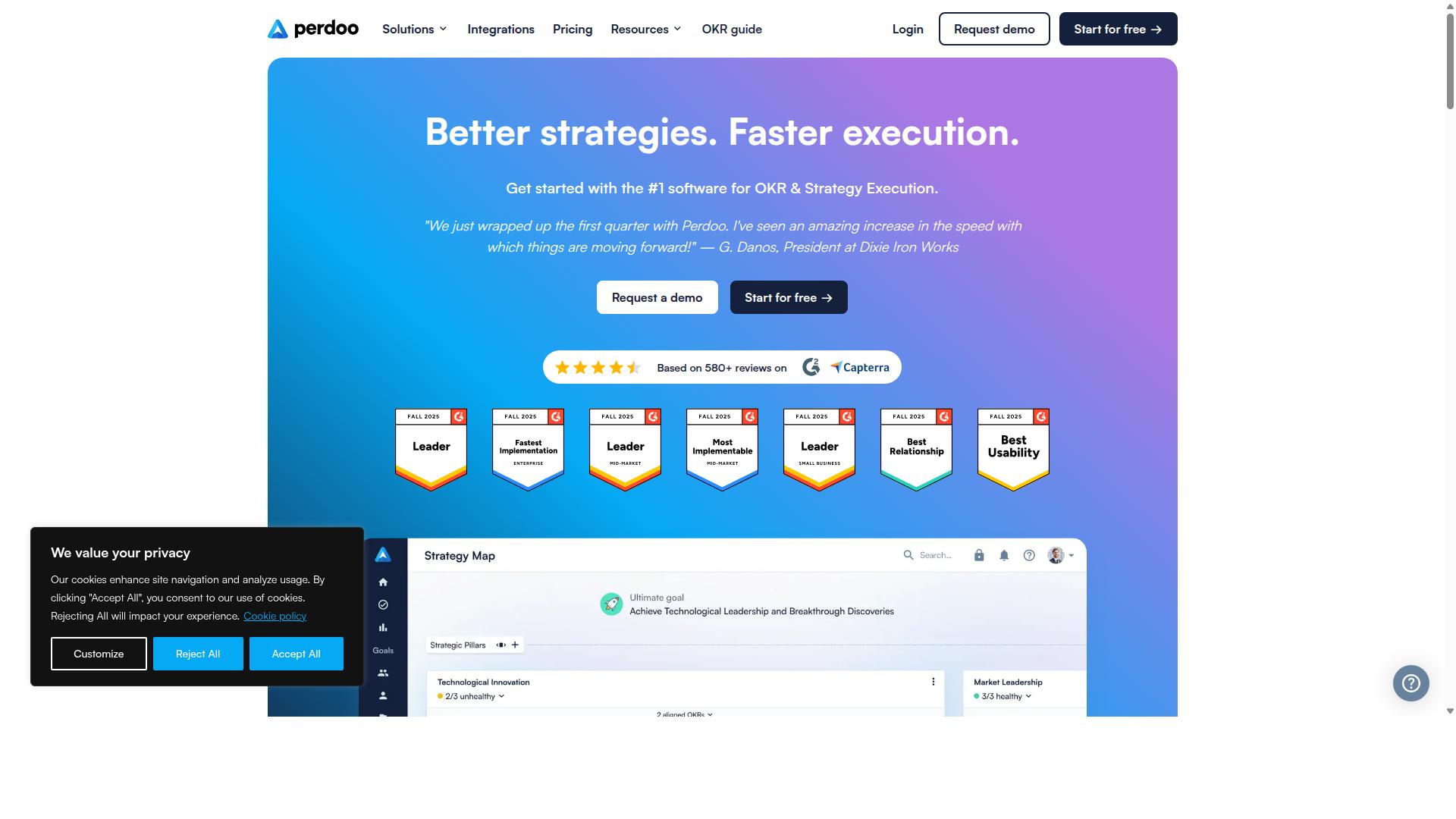
Perdoo specializes in OKR and strategy execution, helping organizations align their goals with measurable outcomes. It combines strategy, goal setting, and performance tracking into a single platform designed around the OKR framework.
The platform emphasizes strategic planning and organizational alignment. Teams can set direction, track key results, and monitor progress through a structured approach that connects high-level company objectives with day-to-day work.
Perdoo is best suited for companies that prioritize goal management over a full performance management suite. If your primary need is to implement OKRs and KPIs within a clear strategic framework, Perdoo covers those essentials well.
That focus comes with a trade-off. Organizations looking for broader HR software features, such as employee engagement tools, continuous feedback, or compensation management, may need to pair Perdoo with additional solutions.
Research suggests that teams considering Perdoo should also account for its pricing structure and minimum seat requirements. These factors can affect total cost as your organization grows beyond a certain size.
For companies evaluating Peoplebox alternatives, Perdoo is a credible option when OKR discipline is the top priority. Just be clear about whether your needs extend beyond strategic goal tracking into wider talent management territory.
7. Betterworks
Betterworks is a performance management platform that integrates OKRs with continuous feedback and employee development. The platform is built around the idea that goal setting should stay connected to everyday work, not just annual reviews. It positions itself as a tool for organizations that want to keep strategy and execution aligned throughout the year.
This platform is primarily aimed at enterprise-level organizations with complex structures and distributed teams. It focuses on agility, helping companies respond quickly to changing market conditions by adjusting goals and priorities in real time. The system connects high-level company objectives with team and individual contributions, so everyone can see how their work moves the business forward.
Betterworks combines several core capabilities into one system. These typically include:
- OKR management for setting and tracking goals across the organization
- Performance reviews that run on continuous cycles rather than annual events
- Feedback tools for peer recognition and manager input
- Employee development features that tie growth conversations to performance data
The emphasis on agility and alignment makes Betterworks a strong choice for companies undergoing transformation or rapid scaling. Its approach suits businesses that have already adopted OKR methodologies and want to extend those practices into performance management and talent development. For teams comparing Peoplebox alternatives, Betterworks stands out when the priority is connecting strategic goals with day-to-day execution at scale.
How to Choose the Right Option
Choosing the right alternative involves mapping your organization's specific needs against each platform's strengths, from budget to feature priorities. Start by listing your current pain points. Are you struggling with goal alignment, employee engagement, or performance review cycles that take too long?
Prioritize must-have features before comparing tools. Common priorities include OKR software, continuous feedback, pulse surveys, 360-degree feedback, and recognition. Make a shortlist of the three to five features that would deliver the most immediate value to your teams.
Budget is a practical constraint, but evaluate it alongside scalability. A cheaper tool that limits user counts or lacks analytics may cost more later when your team grows. Consider whether the platform supports workforce planning, onboarding, and succession planning as your organization evolves.
Think about who will use the platform daily. HeyRamp is designed for leadership, line managers, human resources, and individual contributors, making it versatile across roles. This broad target audience means it can support performance management, employee engagement, goal alignment, and team development in one place.
Compare that versatility against tools like Lattice, 15Five, and Betterworks, which often emphasize specific workflows such as reviews or 1-on-1 meetings. Leapsome and Culture Amp focus heavily on engagement and analytics, while Workday and BambooHR lean toward broader HR software needs.
Finally, test the shortlisted options with a small pilot group. Ask managers and employees for feedback on ease of use and whether the tool fits their daily routines. The right choice should feel natural to your team, not require constant reminders to log in.
Final Verdict
After comparing the leading alternatives, HeyRamp stands out for its all-in-one solution, transparent pricing, and built-in coaching tools that drive engagement and performance. While platforms like Lattice, 15Five, and Betterworks offer strong individual features, HeyRamp consolidates performance management, engagement analytics, and team development into one unified system.
What makes HeyRamp particularly compelling is its one flat fee pricing model, which eliminates the surprise costs that often come with per-module or per-seat pricing from other vendors. The platform is trusted by 20+ organizations and 400+ teams, and it comes with built-in training and education resources that help managers improve their coaching skills from day one.
Automatic compliance documentation with time-stamped secure records is another differentiator. This feature saves HR teams significant administrative time while ensuring audit-ready records are always available. For organizations weighing Peoplebox alternatives, HeyRamp delivers the practical combination of functionality, transparency, and support that drives long-term adoption.
Core Performance Management Features
Look for platforms that offer robust performance review cycles, including self-assessments, manager reviews, and 360-degree feedback capabilities. The best Peoplebox alternatives provide customizable templates that adapt to your organization's specific competencies and evaluation criteria, rather than forcing a rigid structure.
Continuous feedback tools are equally important. Modern performance management is not an annual event, it is an ongoing conversation. The right platform should make it easy for employees and managers to exchange feedback in real time, capturing moments that would otherwise be lost between formal reviews.
When evaluating options, consider how well the platform handles goal tracking and performance analytics. You want visibility into progress trends and the ability to identify high performers and development needs across teams. Integration with existing HR systems is also critical, as is overall ease of use for managers who may not be tech-savvy.
During a trial, test the practical workflows. Set up a complete review cycle from start to finish, capture a piece of real-time feedback, and check whether the analytics dashboards give you actionable insights. If these basic tasks feel complicated, adoption will suffer regardless of the feature list.
Goal Alignment and OKR Tracking
Effective alternatives should enable you to set, track, and align OKRs across teams, ensuring everyone's efforts contribute to company-wide objectives. The best OKR software creates clear lines of sight from individual contributions to departmental goals and ultimately to the strategic priorities of the organization.
Goal alignment fosters transparency and employee engagement because people understand how their daily work matters. When employees can see how their objectives connect to broader company success, motivation and commitment naturally increase. This visibility also helps managers spot misaligned efforts early and course-correct before time is wasted.
Evaluate platforms that support both individual and team-level goal management with easy visibility. Real-time progress dashboards are essential, allowing leaders to monitor momentum without waiting for status update meetings. The ability to cascade objectives and update progress quickly keeps the entire organization moving in the same direction.
During your evaluation, set up a sample OKR and test how it flows through the system. Check whether you can easily link team goals to company objectives and whether progress updates are simple enough that employees will actually maintain them.
All-in-One Engagement and Performance Platform
HeyRamp's platform includes features like 1-on-1 meeting tools with organized agendas, action tracking, and a company structure visualization for better team management. This combination makes it easier for managers to stay organized and understand reporting relationships at a glance, even in complex organizational structures.
The platform covers the full spectrum of talent management needs. Performance reviews, pulse surveys, and feedback systems work together to give leaders a complete picture of team health. Personality insights integrated with performance tools help managers understand communication styles and adapt their approach to each team member.
Guided conversation templates for difficult discussions are a standout feature. These templates provide structure for challenging conversations around performance issues or sensitive topics, reducing anxiety for managers who are unsure how to proceed. Instant coaching tips and automated reminders keep managers on track without requiring them to remember every step.
Aggregated people analytics dashboards and leadership insights surface patterns across the organization. Confidential manager notes allow for private observations, while KPI snapshots provide quick reference points. Built-in training videos for 1-on-1s, performance reviews, and personality testing ensure that managers have the education they need to use the tools effectively.
For organizations evaluating Peoplebox alternatives, HeyRamp's breadth of features under one flat fee is a significant advantage. Rather than piecing together separate tools for reviews, engagement, and coaching, teams get a cohesive platform where data flows naturally between functions.
Transparent Pricing and Built-in Coaching Tools
HeyRamp offers transparent pricing at $5.00 per seat per month (paid monthly) or $3.00 per seat per month (paid annually), with a 14-day free trial that requires no credit card. This flat-fee structure stands in contrast to many performance management tools that layer on additional costs for premium features, onboarding support, or extra modules.
The value proposition centers on one flat fee that covers the entire platform. With HeyRamp, the price you see includes built-in training and education, so teams can get up to speed without paying for separate coaching or implementation services. This all-inclusive approach simplifies budgeting for HR teams and people leaders alike.
Automatic compliance documentation is another built-in benefit. Rather than manually tracking performance reviews, goal check-ins, or feedback cycles, the platform handles the record-keeping for you. This reduces administrative burden and helps organizations stay audit-ready without extra effort.
Beyond the administrative side, HeyRamp includes personality insights integrated with performance tools. This combination allows managers to understand how team members work while also tracking their progress toward goals. The integration supports better communication and more effective 1-on-1 meetings, which are essential for employee engagement and continuous feedback.
For teams evaluating Peoplebox alternatives, the pricing model is worth serious consideration. Many competing platforms charge per module or require annual contracts with hidden fees. HeyRamp's straightforward per-seat pricing, combined with the 14-day free trial and full access from day one, makes it easy to evaluate the platform before committing.
Enterprise teams can request custom pricing paid per seat, and all users can switch plans anytime. This flexibility means the platform can grow with your organization without forcing you into a rigid long-term commitment, a practical advantage when comparing HR software options.
Recommended Resources: